Beyond the logo: when a brand becomes a world
- Mar 11
- 5 min read
Updated: Apr 26
There are brands that you don't wear. You live them. They become part of the way you walk, the music you listen to, the way you see the world from a certain angle. They don't produce seasonal collections: they produce codes, subcultures. And when a code becomes strong enough, it ceases to belong to its creator. It becomes the property of a generation.
Vivienne Westwood, Rick Owens, Chrome Hearts, Alexander McQueen, John Richmond. Five names that have long since ceased to be simple labels sewn onto a garment. They have become complete visual languages, aesthetic ecosystems in which fashion, music, attitude, and identity merge into a single recognizable gesture. This is not a list of influential brands. It is a map of parallel worlds that continue to shape the way entire communities express themselves through what they wear.

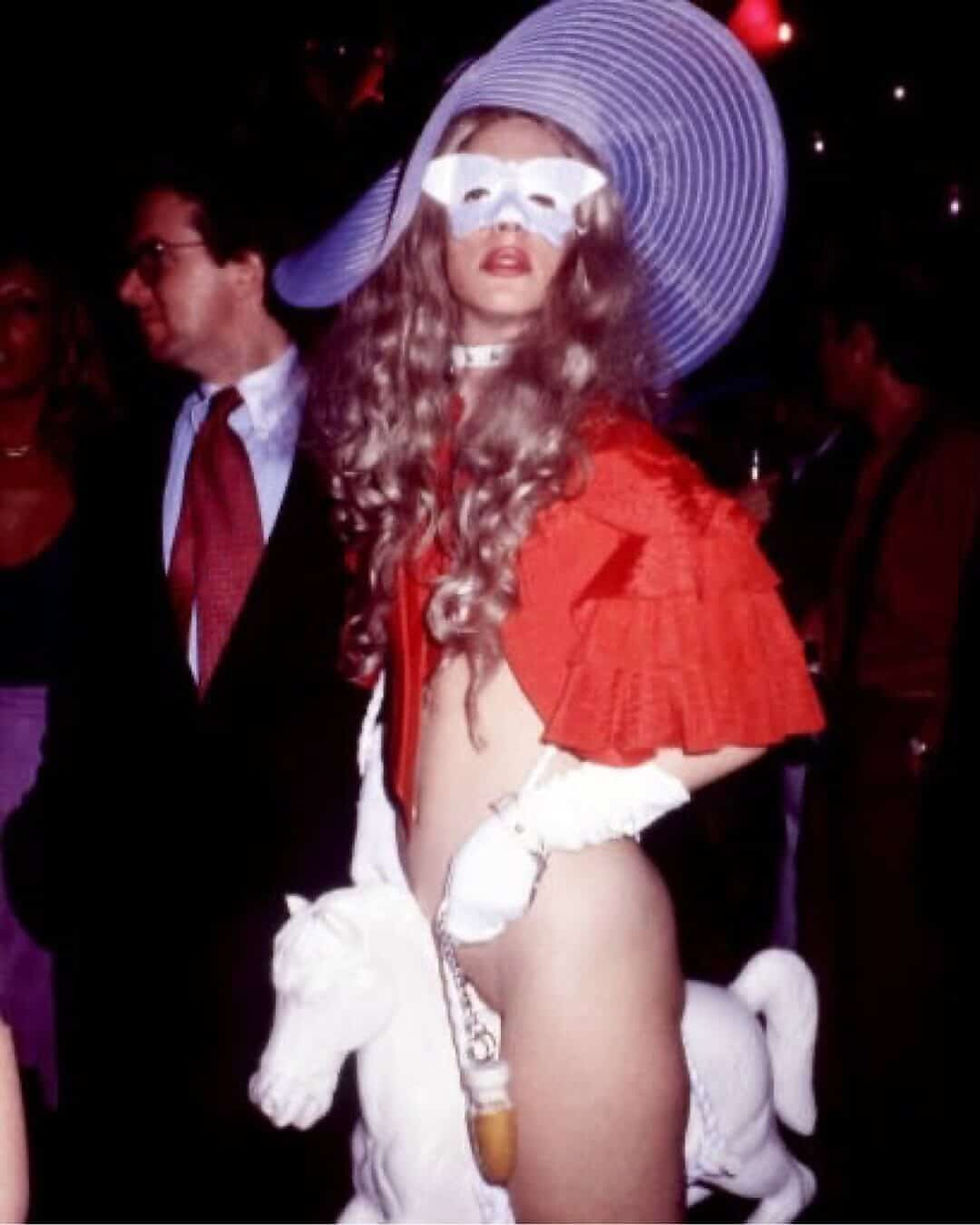
Photo: Robin Laurance
Vivienne Westwood — The street as a manifesto
She started on the street, literally. In 1971, at 430 King's Road in London, she and Malcolm McLaren opened a shop that would change its name and nature several times: from Let It Rock to SEX, from Too Fast to Live Too Young to Die to Seditionaries. It was in that space that punk aesthetics as we know it was born. Westwood did not just dress the Sex Pistols: she built a visual vocabulary made up of deconstructed tartan, revisited corsets, safety pins transformed into jewelry, and slogans printed on leather. In her hands, punk became a political language even before it was a style choice. And it is a language that has never stopped speaking: her silhouettes continue to reappear in the wardrobes of those who seek fashion as an act of positioning, not conformity. After her death on December 29, 2022, that vocabulary became even more meaningful, a legacy that speaks of conscious rebellion to anyone who knows how to listen to it.
Rick Owens — The future that has already happened
If Westwood built the grammar of rebellion, Owens wrote its dark and contemplative side. Born in Porterville, California, in 1961, Owens founded his brand in 1994 in Los Angeles, after dropping out of Otis College of Art and Design and learning his craft by cutting paper patterns, including for illegal copies of designer garments. The turning point came in 2002, when American Vogue sponsored his first show at New York Fashion Week, after Kate Moss was photographed in Vogue Paris wearing one of his leather jackets. Since then, he moved to Paris in 2003, became artistic director at Revillon, collaborated with Adidas and Converse, and had a retrospective at the Triennale di Milano in 2017. But the numbers don't tell the whole story. Owens has built an aesthetic universe that oscillates between spirituality and brutalism: monochromatic palettes, architectural silhouettes, volumes that defy the gravity of the body. It is fashion that seems to come from a future that has already happened. The fact that he remains 100% independent (no luxury group, no external shareholders) is not a detail: it is an integral part of the code. A$AP Rocky, in his 2011 song “Peso,” rapped about wearing almost exclusively Rick Owens. It wasn't product placement. It was belonging.
Chrome Hearts — Silver, garages, and no compromise
Chrome Hearts is another form of resistance: more visceral, more tactile. Founded in 1988 in a Los Angeles garage by Richard Stark, John Bowman, and jeweler Leonard Kamhout, it began as a small artisan production of leather clothing for motorcyclists. The name comes from the working title of a low-budget film, Chopper Chicks in Zombietown, for which Stark had designed the costumes. Its first public exposure came through the rock scene: Steve Jones of the Sex Pistols began wearing Stark's pieces, followed by Mötley Crüe and Guns N' Roses. In 1992, Chrome Hearts won the CFDA award for best accessory designer of the year. And Stark almost didn't accept it because he didn't know what the CFDA was. Cher presented him with the award. After parting ways with the co-founders in 1994, Stark and his wife Laurie Lynn transformed Chrome Hearts into something bigger: an imaginary world that extends from sterling silver jewelry to furniture, eyewear, and perfumes, without ever giving in to mass distribution. No direct e-commerce, no conventional seasonality. Each piece is handmade in the Hollywood factory, and the floor of each flagship store is engraved with a phrase that perhaps sums up the brand's attitude better than anything else. In 2022, the Starks received the CFDA Geoffrey Beene Lifetime Achievement Award.
Alexander McQueen — Where fashion becomes storytelling
Alexander McQueen is where fashion becomes total storytelling. Lee Alexander McQueen, born in 1969 in London's East End, the son of a taxi driver, entered the world of fashion through the most artisanal door: at sixteen, he became an apprentice in Savile Row, first at Anderson & Sheppard, then at Gieves & Hawkes. Classic British tailoring taught him how to cut; he subverted it from within. His fashion shows are not presentations: they are performances. The 1995 “Highland Rape” collection shook the system with its aesthetic violence; “No. 13” in 1999 ended with two robotic arms spray-painting a white dress worn by Shalom Harlow, live, on the catwalk. Each season was a gothic, romantic, disturbing tale — with references ranging from the Renaissance to organic decomposition, from British colonial history to the fragility of the human body. McQueen did not decorate: he questioned. His death in February 2010 left a void that the fashion system has never really filled. But his language — drama, extreme craftsmanship, visual emotion as a form of knowledge — continues to serve as a reference point for anyone who rejects the idea that fashion should only be beautiful.
John Richmond — The noise within the system
And then there is Richmond, the designer who brought the noise of music into the fashion system with a frankness that few others have had. Born in Manchester in 1960, Richmond graduated in fashion design from Kingston University in 1982 and moved first to London, then to Milan, collaborating with Armani and Fiorucci before founding his own brand in 1987. His Destroy line, launched in the same year, became a cult item in the early 1990s: ripped jeans, worn leather, aggressive lettering, the iconic “RICH” print on denim that became a cultural phenomenon in Italy. Richmond didn't copy rock: he translated it. He dressed Madonna, David Bowie, Mick Jagger, George Michael, and Axl Rose, not through product placement, but because the musicians came into his store and bought his clothes. In an interview with Billboard, Richmond described that period with a phrase that serves as a manifesto: punk, he said, is an attitude, not a trend. The brand, now owned by the Italian group ARAV since 2017, has gone through ups and downs, including a long legal battle after Fashioneast acquired the rights in 2015. But its return to London Fashion Week for the Fall/Winter 2025 collection, with an immersive presentation without models and the sound of The Verve's “Bitter Sweet Symphony,” proved that the code (leather, controlled chaos, stage energy) is still alive.
Five worlds, one truth
Five universes. Five ways to transform a garment into a statement of existence. What they have in common is not a style, but a method: building an imaginary world so dense and coherent that anyone who enters it is no longer simply wearing a brand: they are declaring who they are. In an age when visual identity is consumed at the speed of a feed, these five worlds continue to resist. Perhaps because they never needed to be fashionable. They have always and only needed to be true.


Comments