The Museum That Never Was: Camden Gives a Home to a Century of Adolescence
- Mar 24
- 4 min read
Updated: Apr 4
Georgiana Street, Camden, London. Behind the High Street where punks sold pins in the 1980s and Amy Winehouse bought cigarettes at the corner store, there is a 600-square-meter industrial building poised to become something that has never existed before: a museum entirely dedicated to youth culture. Not to youth as an abstract concept, not to adolescence as a clinical phase. To subcultures.
To rave flyers. To concert T-shirts. To dub sound systems.
To the scribbled T-shirts from the last day of school.
Leeds Digital Festival
Ten years to build an idea
The Museum of Youth Culture is set to open its doors in 2026 (after more than ten years of development) at its new location on the St Pancras Campus, just a short walk from Camden Town. The opening, initially scheduled for December 2025, has been postponed due to water damage in the building’s basement that required restoration work. The final opening date announced is mid-May. What is certain is the scope of the project: an archive of over 150,000 photographs, objects, and oral histories collected over twenty years, now ready to find a permanent home.
From Sleaze Nation to the archive
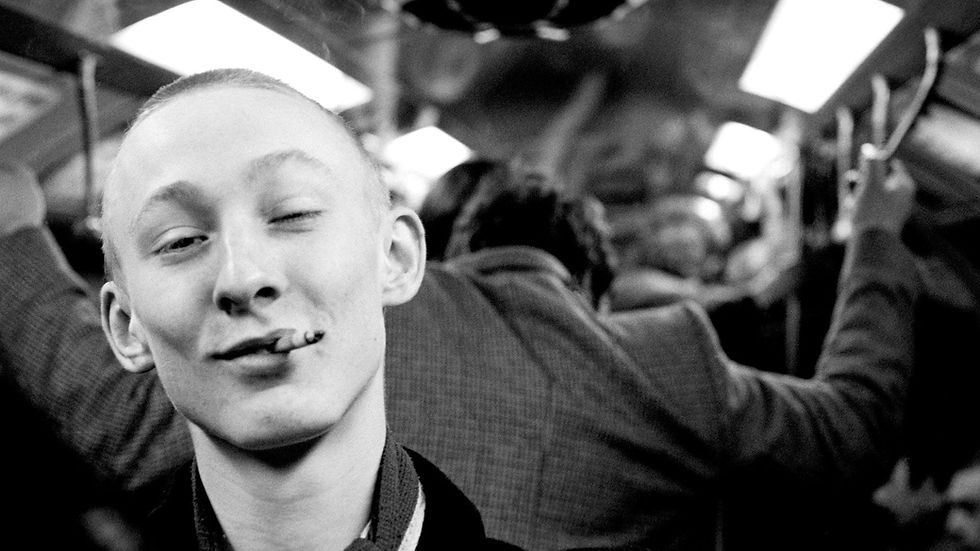
The idea originated with Jon Swinstead, founder of Sleaze Nation, a magazine that documented the British rave and club scene in the 1990s. His photographic collection, which grew over time, evolved into an archive of images capturing youth culture in the 1980s and 1990s, used by magazines and newspapers. In 2015, that collection became the core of a museum without walls: a digital archive, a series of pop-up exhibitions, a nomadic cultural entity. Exhibitions in nightclubs, public libraries, vacant commercial spaces: the museum has always sought out the places where youth culture actually lives, not those where it is celebrated in hindsight.

Three galleries, no silent corridors
The Camden space will house three galleries: two dedicated to rotating exhibitions from the permanent archive, one reserved for emerging young creatives. Forty percent of the space will be entirely dedicated to young people, including a gallery for emerging artists and a music production studio. Alongside these, there will be talks, screenings, workshops, and a space with a bar and record shop. Not a museum in the traditional sense of the term, then. No silent corridors, no display cases illuminated with reverential respect.
First misunderstood, then celebrated
That is precisely the point. What happens when subcultures enter an institution? When a poorly printed flyer for an illegal rave from 1989 ends up behind glass, next to the front page of The Sun that condemned that very rave as a public danger? Creative director Jamie Brett cited this juxtaposition as one of the most significant pieces in the collection: the flyer for the Midsummer Night’s Rave at Lydd Airport and the tabloid cover that demonized it, displayed side by side, illustrating how youth culture is first misunderstood and then celebrated.
Memory at risk of erasure
It is a tension that runs through the entire project. The museum actively works to include underrepresented narratives: LGBTQIA+ history, Black British culture, even youth cultures born on social media platforms, now at risk of erasure or digital loss. Brett himself posed the question in direct terms: how do you document life on social media? Do TikToks belong in a museum collection?
And how will they be presented to the public in the future?
These are questions that concern not only museography, but the way a generation constructs and preserves its own memory.
From lockdown attics to the permanent collection
The project is supported by the National Heritage Lottery Fund and supplemented by collaborations with brands, licensing, and revenue from pop-ups. In 2022, prior to its permanent home, the museum produced *Grown Up in Britain: 100 Years of Teenage Kicks*, an exhibition built from six thousand photographs and objects collected during the lockdown, when the public was invited to search through boxes, attics, and family albums. Personal snapshots displayed alongside works by photographers such as Ken Russell, Normski, Anita Corbin, and Gavin Watson—grassroots history and artistic history, on equal footing.
And Italy?
Italy has nothing comparable. There is no institutional archive of Italian youth subcultures, no permanent space documenting the social centers of the 1990s, the hip-hop scene at the Murazzi, skateboarding in suburban courtyards, or raves in the abandoned factories of Brianza. The memory of Italian youth is entrusted to private photographs, to fleeting Instagram posts, to oral memories that fade away. The Museum of Youth Culture in Camden is not just a London opening. It is a model. And it is an open question posed to every country that has produced subcultures without ever thinking to preserve them.
When it opens (and at this point it’s a matter of months, not years), it will be the first space in the world to state a simple truth: what young people do is history. Not folklore, not a passing fad, not deviance to be corrected. History.
With the same dignity as the paintings in museums and the documents in national archives. Just a little noisier.


Comments